
Author name: fahizmhmd@gmail.com

Uncategorized

Google Algorithm Updates 2026: What You Must Know

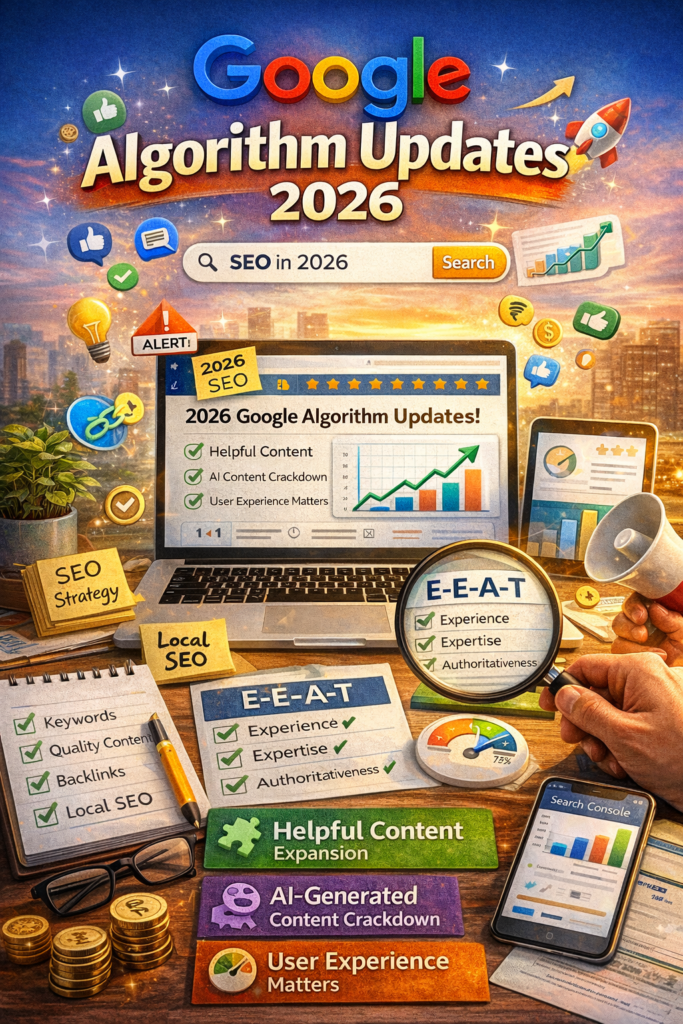
Google Algorithm Updates 2026: What You Must Know  If you run a business and have a website, Google’s algorithm updates directly affect how many people find you online. Every year, Google makes hundreds of changes to how it ranks websites. But 2026 has brought some of the biggest shifts in recent memory. Whether you are a startup founder or a small business owner, understanding these changes can make or break your online growth. This blog will walk you through the most important Google algorithm updates of 2026, what they mean for your business, and what you should do right now to stay ahead. If you have been working with or looking for the best digital marketing agency in Kerala, this guide will also help you ask the right questions and make smarter decisions. Why Google Algorithm Updates Matter for Your Business Google is the front door to the internet for most people. When someone searches for a product or service, they almost always start on Google. If your website shows up on the first page, people find you. If it does not, they find your competitor. Google updates its search algorithm to give users better, more helpful results. When Google changes its rules, websites that follow the new rules move up. Websites that do not move down. Some businesses lose half their web traffic overnight after a major update. Others gain a lot. The good news is that Google always rewards the same core things: useful content, fast websites, good user experience, and genuine authority. The updates just change how strictly Google checks for these things. The Core Theme of Google’s 2026 Updates: Trust and Usefulness Before we go into each update, you need to understand one big idea that runs through all of 2026’s changes. Google is now more focused than ever on trust and genuine usefulness. Google wants to show people content that was written by someone who actually knows the topic, not content that was just stuffed with keywords to trick the algorithm. It wants to show websites that real people visit, stay on, and find helpful. This shift has been building for a few years, but 2026 is the year it became very clear and very powerful. If your content is thin, generic, or clearly written just to rank on Google without offering real value, 2026 updates will hurt you. If your content is honest, expert, and truly helpful to your audience, 2026 will reward you. Update 1: The Helpful Content Expansion Google’s helpful content system has been around since 2022, but in early 2026 it got a major upgrade. The system now looks at your entire website, not just individual pages. If a large portion of your website has low quality or unhelpful content, your entire site can lose rankings even pages that are actually good. What this means for you: Do a full content audit of your website. Look for old blog posts that are outdated, pages that say very little, or product descriptions that are copied from your supplier. Remove what is truly useless. Update what is outdated. Your website should feel like a helpful, trustworthy resource not a random collection of pages. A good way to test this is to ask yourself honestly: “If a customer read this page, would they leave feeling informed and helped?” If the answer is no, the page needs work. Update 2: AI-Generated Content Crackdown In 2025 and early 2026, many businesses made the mistake of flooding their websites with AI generated content without any human editing or expert input. Google got much better at detecting this, and the March 2026 core update hit these websites hard. This doesn’t mean you cannot use AI for writing. It simply means that the content you are creating using these tools needs to be like that of a human, accurate, and based on actual knowledge. Google uses the term E-E-A-T, which stands for Experience, Expertise, Authoritativeness, and Trustworthiness. Google has made this criterion stricter than ever in 2026. What this means for you: If you use AI tools for creating content, ensure a human expert reviews and edits the content and adds their own expertise before publishing. Share real case studies. Talk about actual experiences. This is what separates content that ranks from content that gets filtered out. The best digital marketing agency in Kerala you choose should be creating content that reflects your brand’s real expertise not just mass-producing generic articles that say nothing new. Update 3: Page Experience Gets Stricter Google has always cared about how fast your website loads and how easy it is to use on a phone. In 2026, these signals referred to as Core Web Vitals became more important. Google now measures not just speed, but how stable your page is as it loads, whether buttons are easy to click, and whether the layout shifts around as content loads. Many business websites, especially older ones, are failing these tests without the owners knowing. A slow website does not just frustrate visitors it actively loses rankings. What this means for you: Test your website at Google’s PageSpeed Insights (it is free). See what score you get on mobile. If it is below 70, you have work to do.  Some of the fixes for this issue include compressing images, removing unnecessary plugins if you are a WordPress user, and choosing a faster hosting plan. It is a good time to highlight the fact that having a technically sound team handling your website is of prime importance in 2026. If you are already a client of the best digital marketing agency in Kerala, they should be conducting performance checks for your website as part of their services. Update 4: Local Search Gets More Personal For businesses that serve a specific area , a restaurant in Kochi, a law firm in Thiruvananthapuram, or a clothing store in Calicut local SEO has always been important. In 2026, Google made local search results even more personalised based on the
Uncategorized

How to Turn Website Visitors into Customers

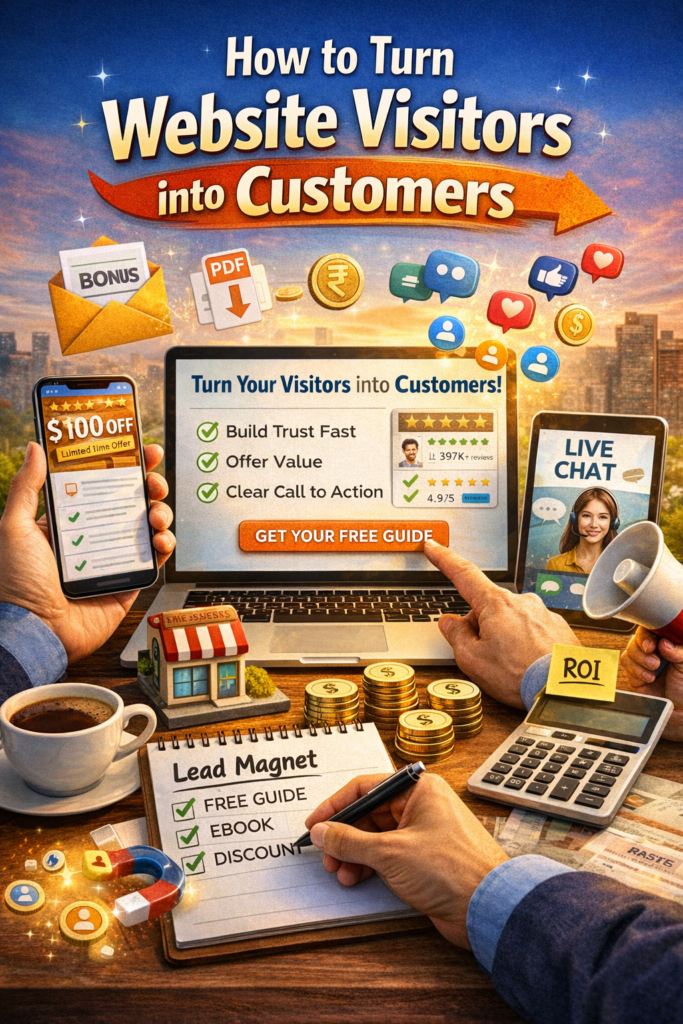
How to Turn Website Visitors into Customers  You worked hard to build your website. You spent money on ads. You posted on social media every day. And still, people visit your site and leave without buying anything. Sound familiar? You are not alone. Most business owners face this problem. Getting people to your website is one thing. Getting them to take action is a completely different game. The good news is that it is not as complicated as it sounds. With the right steps, you can turn your website visitors into paying customers. In this blog, we will walk you through simple and practical ways to do exactly that. Whether you run a small shop or a growing startup, these tips will help you get more out of the traffic you already have. Why Do Visitors Leave Without Buying? Before we talk about solutions, let us understand the problem. Most visitors leave a website within a few seconds. This happens for a few key reasons. Your website may load too slowly. Your message may not be clear. Visitors may not know what to do next. Or they simply may not trust your brand yet. Think of your website like a physical shop. If a customer walks in and no one greets them, the shelves are messy, and they cannot find the price tags, they will walk out. A website works the same way. The goal is to make every visitor feel welcome, understood, and confident enough to take action. Step 1 :Make a Strong First Impression You have about five seconds to grab a visitor’s attention. That is all. When someone lands on your homepage, they should immediately understand what you do, who you help, and why they should choose you. This is called your value proposition. Keep your headline simple and direct. Instead of “Welcome to Our Website,” try something like “We Help Kerala Businesses Grow Online.” That is clear. That tells the visitor they are in the right place. Use a clean design with good spacing. Avoid clutter. Use colors that are easy on the eyes. And most importantly, make sure your website loads fast. A slow website is the number one reason people leave. You can check your website speed using free tools like Google PageSpeed Insights. If your site takes more than three seconds to load, you are losing customers every single day. Step 2: Know Who You Are Talking To Not everyone who visits your website is your customer. And that is okay. What matters is that you speak directly to the right people. When your message feels personal and relevant, visitors are far more likely to stay and take action. Start by thinking about your ideal customer. What is their age? What problem are they trying to solve? What do they worry about? What do they want to achieve? Once you know this, write your website content as if you are having a one-on-one conversation with that person. Use simple words. Avoid jargon. Speak to their pain points and show them how you can help. For example, if you are a business owner in Kerala looking for marketing help, you would want to work with the best digital marketing agency in Kerala, one that understands your local market and speaks your language. That kind of targeted message makes visitors feel seen and understood. Step 3: Use Clear Calls to Action Every page on your website should have one clear goal. And every visitor should know what to do next. This is what we call a Call to Action, or CTA. It is a button or a line of text that tells the visitor exactly what step to take. Some common examples include “Get a Free Quote,” “Book a Free Call,” “Download Your Guide,” or “Start Today.” The mistake most business owners make is having too many CTAs on one page. When visitors have too many choices, they often end up choosing nothing. Keep it simple. One page, one goal, one CTA. Make sure your CTA button stands out. Use a contrasting color. Place it above the fold, meaning the visitor can see it without scrolling. And repeat it again at the bottom of the page. Your CTA should also be action-oriented. Instead of “Submit,” say “Get My Free Strategy.” Instead of “Click Here,” say “Yes, I Want to Grow My Business.” Small changes in words can make a big difference in clicks. Step 4 :Build Trust Before You Ask for the Sale People buy from brands they trust. And trust takes time to build. If a visitor lands on your website for the first time, they do not know you. They have no reason to hand over their money or personal details yet. Your job is to earn that trust quickly. There are several ways to do this. First, show real customer reviews and testimonials. When people see that others have had a good experience with you, they feel safer. Video testimonials work even better than written ones. Second, display your credentials. If you have been featured in a newspaper, won an award, or worked with well known brands, show it. Social proof is a powerful trust signal. Third, add an “About Us” page with real photos of your team. People connect with people, not logos. Let visitors see the human side of your business. Fourth, make your contact details easy to find. The presence of a phone number, email, and physical address makes it clear to visitors that you are a legitimate business. Working with the best digital marketing agency in Kerala can also help you develop an online presence that makes it easier and faster to build trust with people. Step 5: Offer Something Valuable for Free Not everyone is ready to buy from you, even if they visit your site. Some need a little more time to make a decision. That is perfectly normal. This is where a lead magnet comes in.A lead magnet is something that is valuable, which

Uncategorized

How Local Businesses Can Dominate Online in 2026

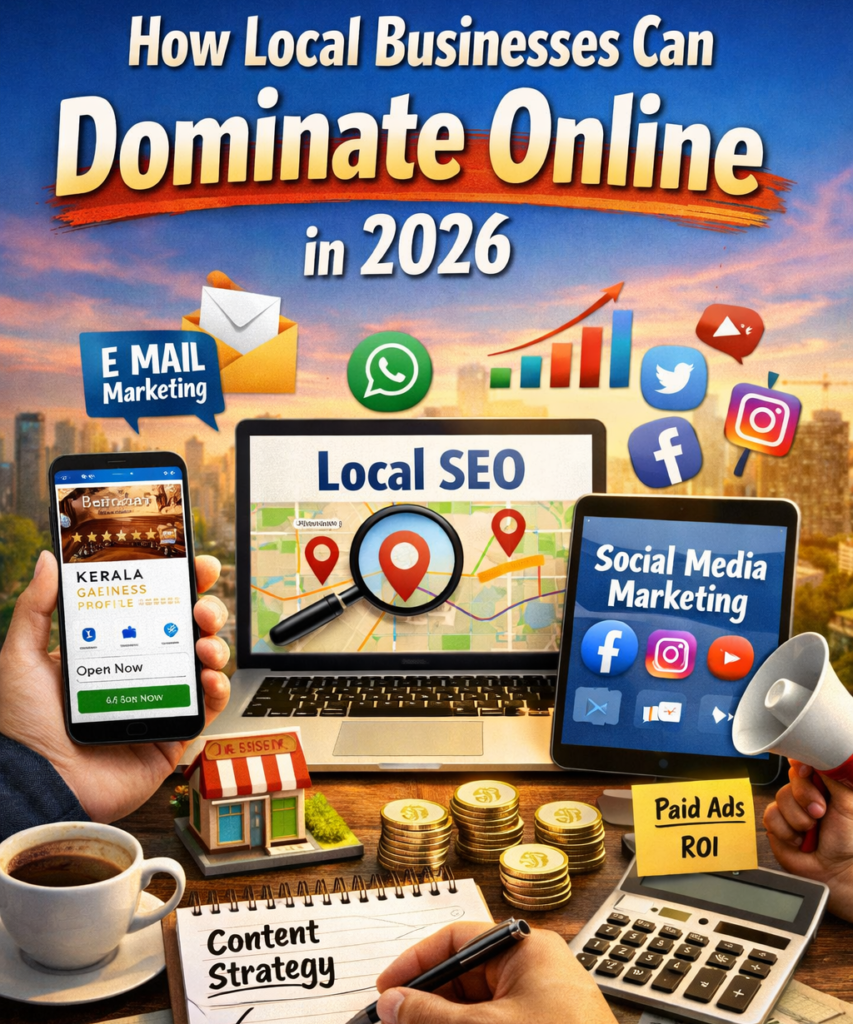
How Local Businesses Can Dominate Online in 2026 The internet has changed the way people find local businesses. In 2026, if your business is not visible online, it simply does not exist for most of your potential customers. People search for everything on Google from the nearest bakery to the best plumber in town. If your business does not show up, your competitor gets the customer. The good news is that getting your local business to dominate online is no longer only for big companies with huge budgets. With the right strategy, any small or medium business can win online. This is exactly what the best digital marketing agency in Kerala helps local businesses do every day grow their online presence and bring in more customers. In this guide, you will learn simple, clear steps to grow your business online in 2026. These tips are easy to follow, even if you are just getting started with digital marketing. 1. Start With a Strong Google Business Profile Your Google Business Profile is like your online shop front. When someone searches for your type of business in your city, Google shows a map with local businesses. If your profile is complete and well-managed, your business can appear at the top of that list. Make sure your profile has your correct business name, phone number, address, website link, working hours, and a short description of what you do. Add real photos of your shop, products, or team. Ask your happy customers to leave Google reviews. A business with many good reviews builds trust fast. Update your profile regularly with new photos, posts, or offers. Google loves active profiles and rewards them with better visibility. This one step alone can bring you more walk-in customers and calls without spending a single rupee on ads. 2. Build a Website That Works for You A website is your most important digital asset. It works 24 hours a day, 7 days a week, even while you sleep. But a website that loads slowly, looks bad on a phone, or is hard to navigate will push people away. In 2026, most people will access the internet using their phones. Therefore, your website should look good on a phone screen and should load fast. Use headings that everyone understands, and use a call-to-action button such as “Call Now” or “Book an Appointment.” Your website should inform visitors about what you do, where you are, and why you are better than the rest. A simple website will convert more visitors into customers than a fancy website that confuses visitors. 3. Use Local SEO to Rank Higher on Google            Search Engine Optimisation, or SEO, is how you get your website to show up on Google when people search for your services. Local SEO is a type of SEO that specializes in getting your business found by people in your area or city. For you to use Local SEO, you should have your city name and service keywords in your website content. For instance, if you run a salon business in Kochi, you should have the keyword “salon in Kochi” or “hair services in Kochi” in your headings or content. Many business owners in Kerala are using the best digital marketing agency in Kerala to help them with local SEO. It’s worth noting that this process requires time, but it will bring you free, organic traffic to your website every single month without you having to pay for ads. Also make sure your business name, address, and phone number are the same on every website where your business is listed: Google, Justdial, Sulekha, Facebook, and others. This consistency helps Google trust your business and rank it higher. 4. Use Social Media to Build Real Connections Social media is not just about posting photos. It is about building a community of people who know your brand, trust your business, and come back to you again and again. Platforms like Instagram, Facebook, and YouTube are powerful tools for local businesses. You do not need to be on every platform. Pick one or two where your customers spend most of their time. For most local businesses, Instagram and Facebook work very well. Post content that adds value, tips, behind-the-scenes videos, customer stories, and product highlights. Consistency is the key. Posting three to four times a week is better than posting ten times one week and going silent for a month. Engage with your followers by replying to comments and messages quickly. This tells people that a real human is behind the business, and that builds trust. 5. Run Smart Paid Ads Without Wasting Money Paid ads on Google and Facebook can bring customers quickly. But without proper knowledge of what you are doing, you can end up wasting a lot of money on ads that don’t work. The trick here is to reach the right people and give the right message. Google Ads allow you to show your business at the top of search results when someone types in a keyword related to your service. Facebook and Instagram ads let you target people by their age, location, interests, and behaviours. For local businesses, location targeting can be a powerful tool. Your ad can be shown only to people living within a 10-kilometre radius of your shop. Start with a small daily budget, test different ad copies and images, and focus on what brings real results. Track every rupee you spend. A good digital marketing team will help you spend wisely and get the best return on every ad campaign. 6. Create Helpful Content That Attracts Customers Content marketing is one of the most powerful and affordable ways to grow online. When you share helpful information through blog posts, videos, or social media you attract people who are already interested in what you offer. Think about the questions your customers ask you every day. Write a blog post or shoot a short video that answers those questions. For example, if you run an AC service

Scroll to Top